Medication Charts for Ndis Providers
Management of Medication Definition
A medication is a substance used to prevent, diagnose, manage or treat an illness, disease, health condition or behaviour. Medications may help relieve symptoms, improve health, replace substances the body needs or support a person’s overall wellbeing.
What is a Medication Chart?
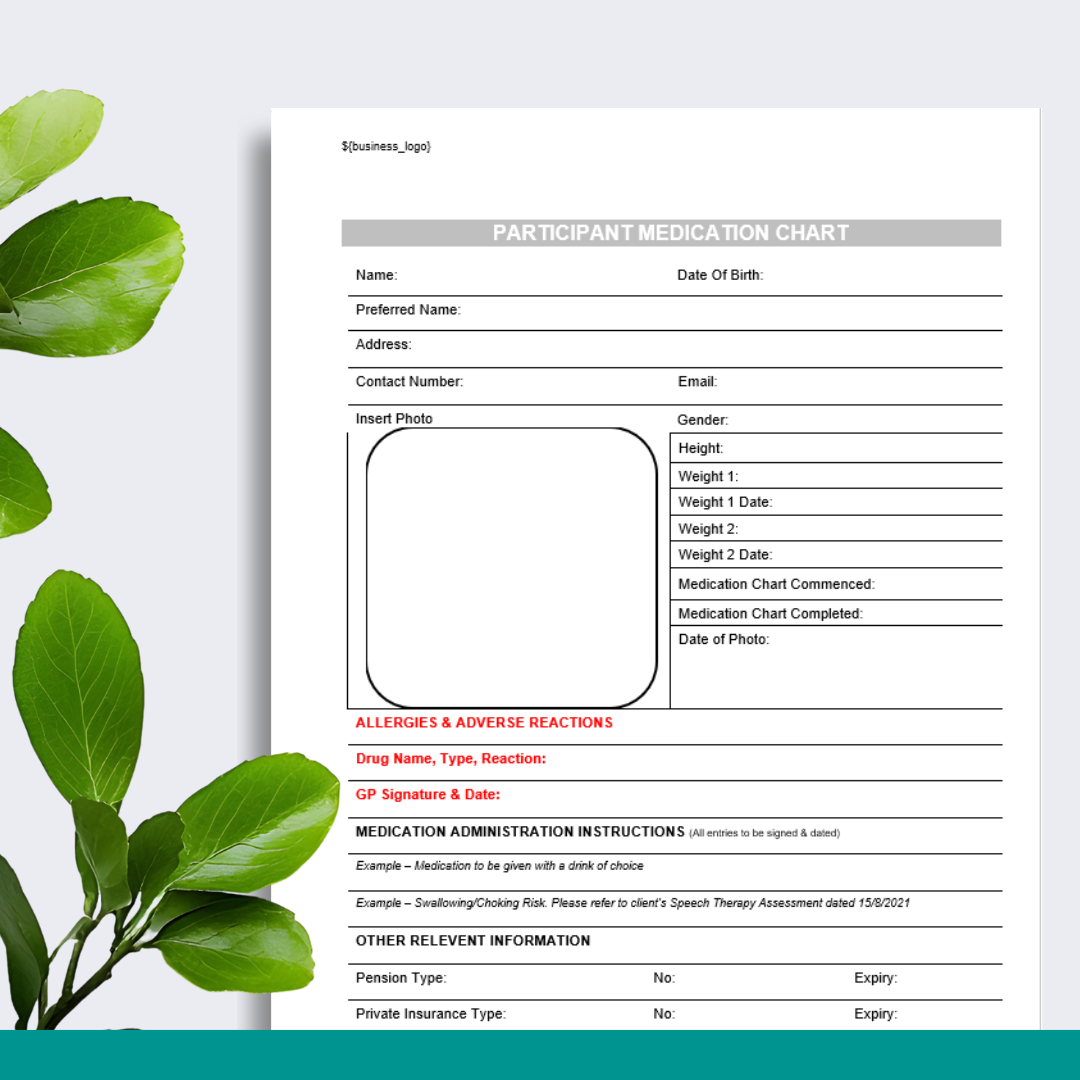
A Medication Chart is a paper chart designed to record a participant’s medication orders and administration over up to six months. It is a record-keeping tool that works alongside a current prescription and your medication policy and procedures. It contains:
- Participant identification, information and a photo
- Allergies and adverse reactions
- Regular Medication (Packed) – Medication that the participant usually takes that is packed within a dosage aid. E.g., Tablets.
- Regular Medication (Non-Packed) – Medication that the participant usually takes that can’t be packed within a dosage aid. E.g., Liquids
- Short Term – Medication that has a start and end date. E.g., Antibiotics, Eye Drops
- When Required (PRN) – Medication is taken when the participant requires.
- Over-the-counter – Medication is purchased from a chemist or pharmacy, e.g., Cold Mixtures
- Medication administration signing records
- Daily medication counts - some versions
- Medicines received and removed registers
- Medication notes, route, time, name, dosage and gp/prescriber instructions
Types of Medications
Medications can be provided in different forms. The form of medication determines how it is used and how it enters the body, such as:
- Tablets
- Capsules
- Liquids
- Creams and ointments
- Inhalers
- Injections
- Patches
- Drops
- Suppositories
Management of Medication Ndis Practice Standards
- Outcome: Each participant requiring medication is confident their provider administers, stores and monitors the effects of their medication and works to prevent errors or incidents.
To achieve this outcome, the following indicators should be demonstrated:
- Records clearly identify the medication and dosage required by each participant, including all information required to correctly identify the participant and to safely administer the medication.
- All workers responsible for administering medication understand the effects and side-effects of the medication and the steps to take in the event of an incident involving medication.
- All medications are stored safely and securely, can be easily identified and differentiated, and are only accessed by appropriately trained workers.
Management of Medication Clinical Limitations
All managers and workers cannot prescribe, select, commence, cease, change, or clinically review participant/s medications or the medication chart. These clinical decisions belong strictly to qualified medical or health practitioners or specialists.
Management of Medication Documentation
You must maintain accurate, real-time paper-based records and/or digital tracking system if you administer a medication to a person or ndis participant.
- Medication Management Policy and Procedures
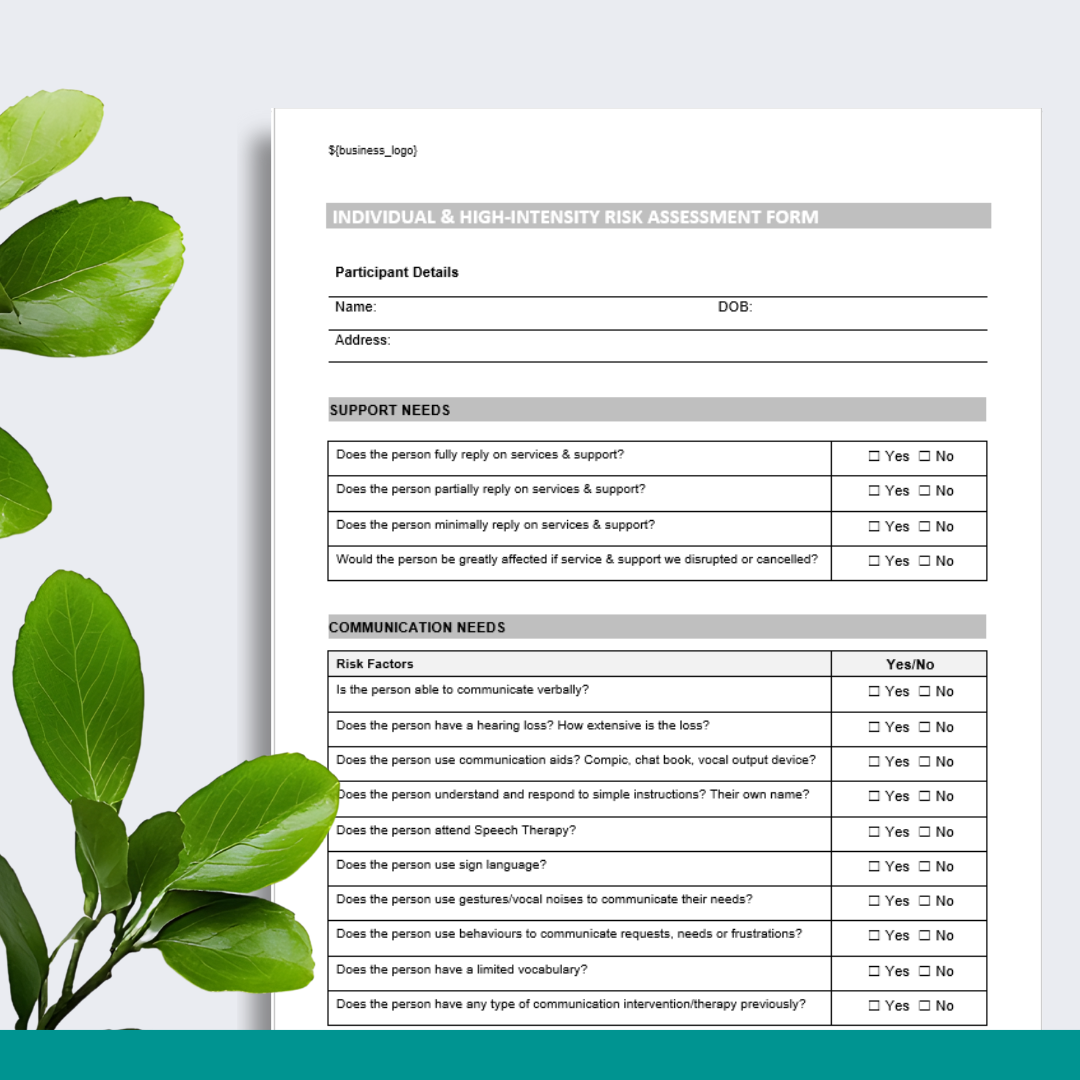
- Individual Risk Assessment Form
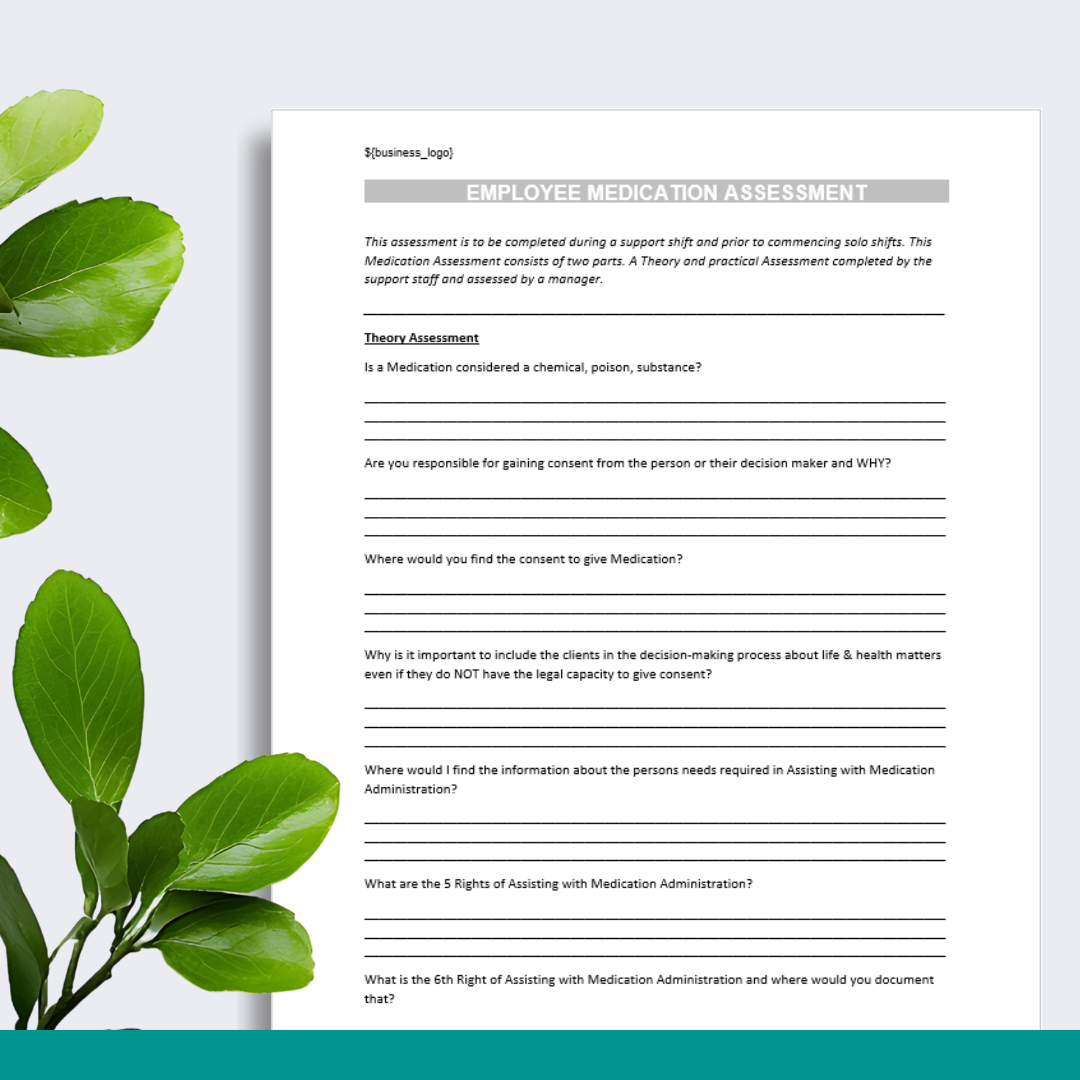
- Medication chart (completed by GP)
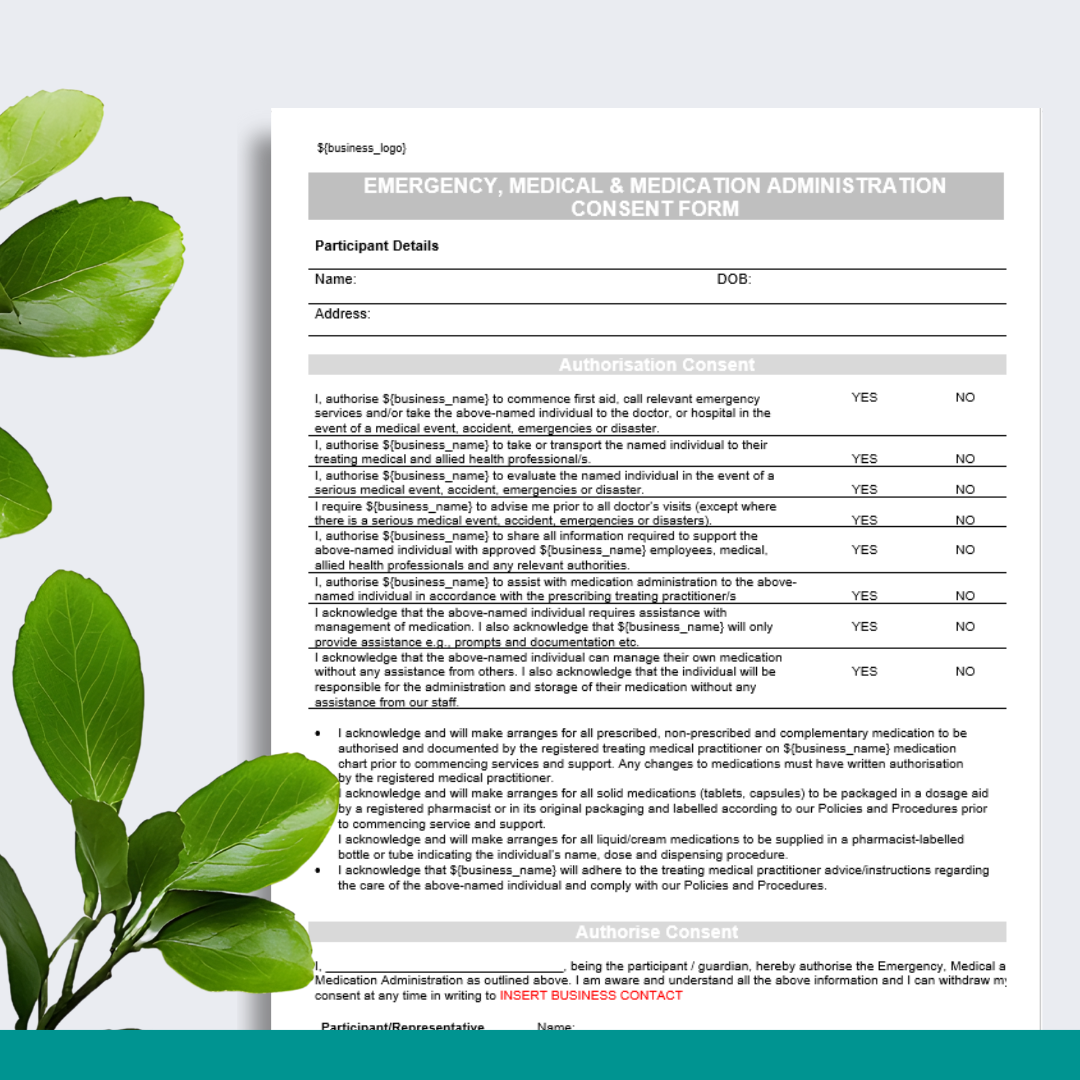
- Medication Administration Consent Form/s
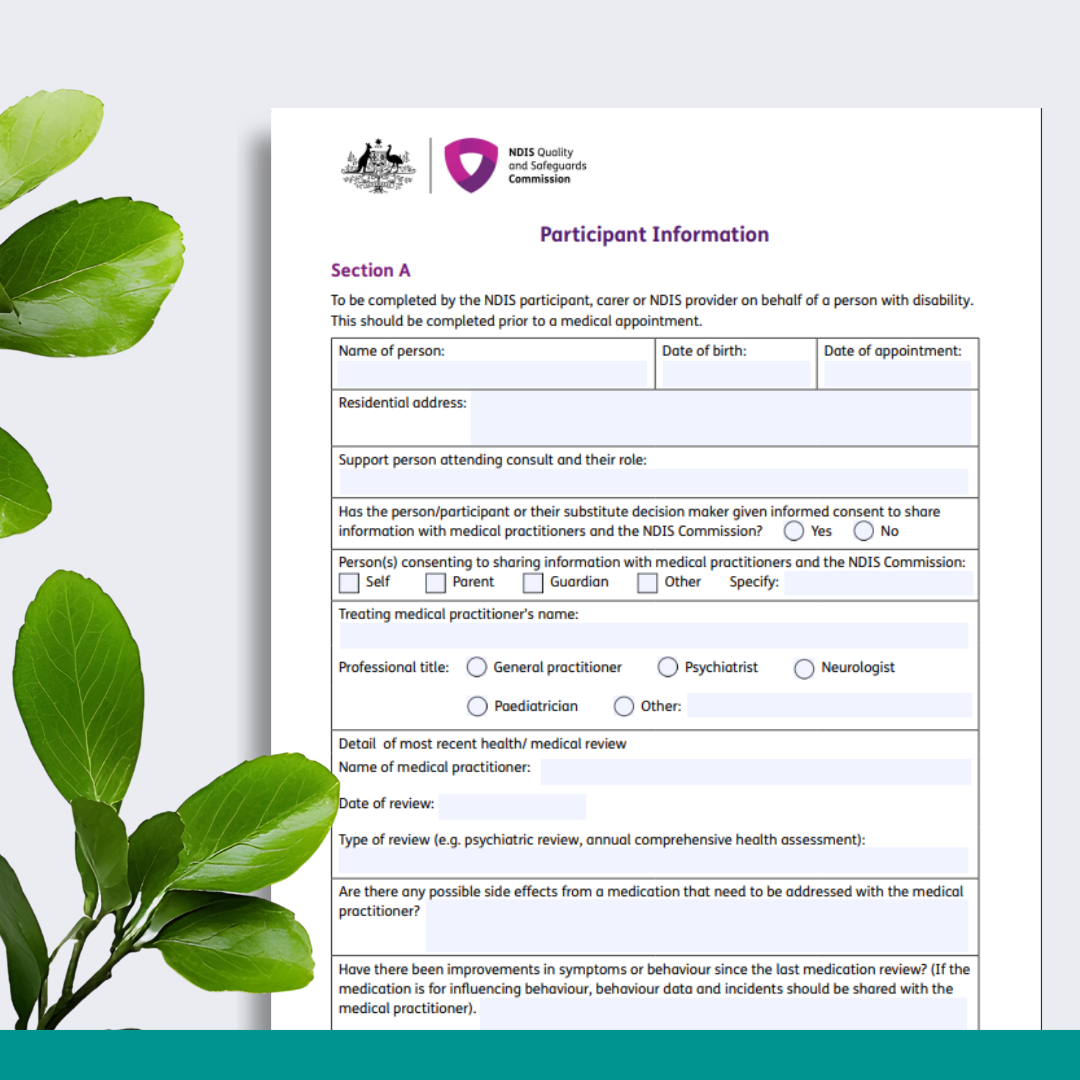
- Clarification of the Purpose of Medication Form (completed by GP)
- PRN support plans
- Progress notes
- Communication diaries
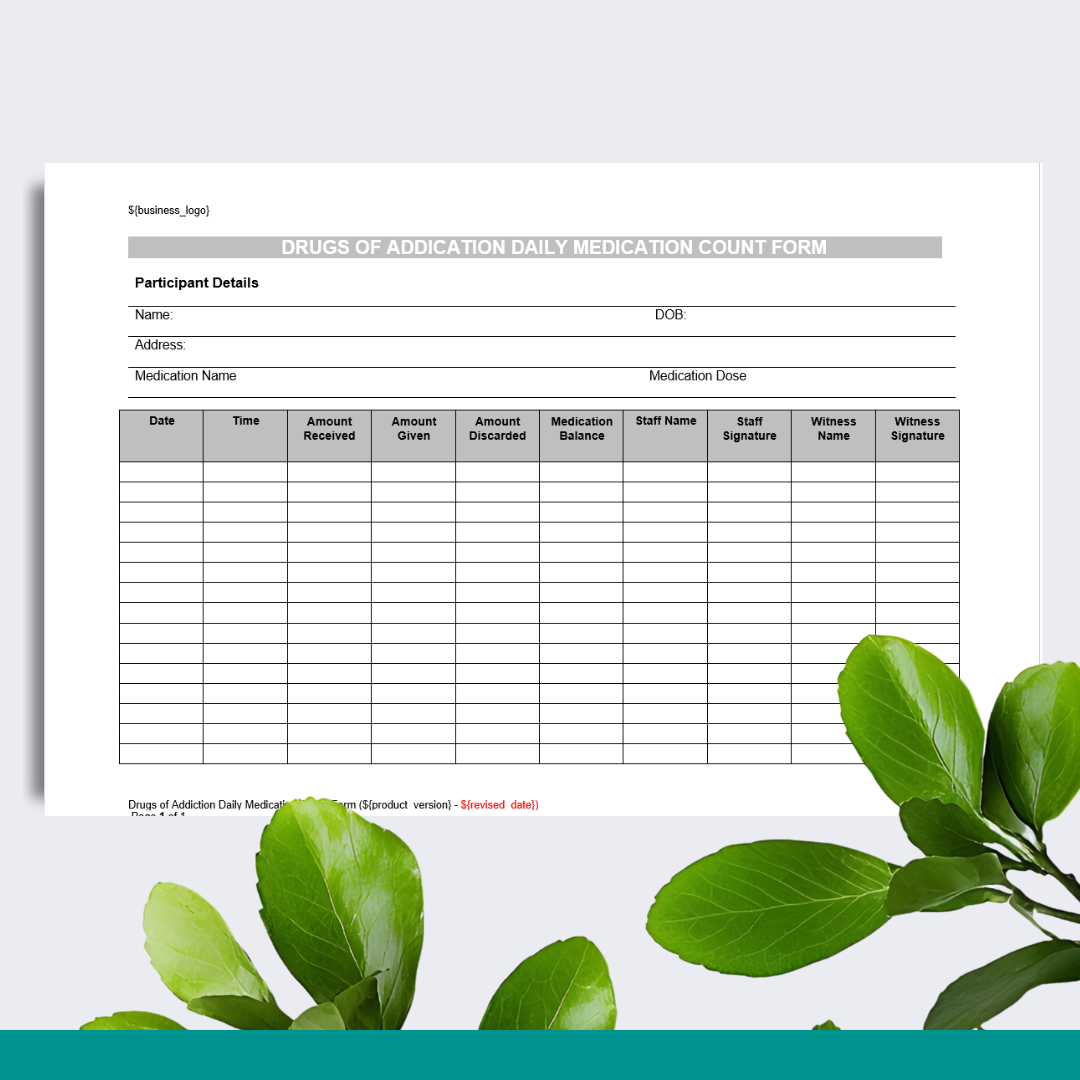
- Drugs of Addiction Medication Count Form
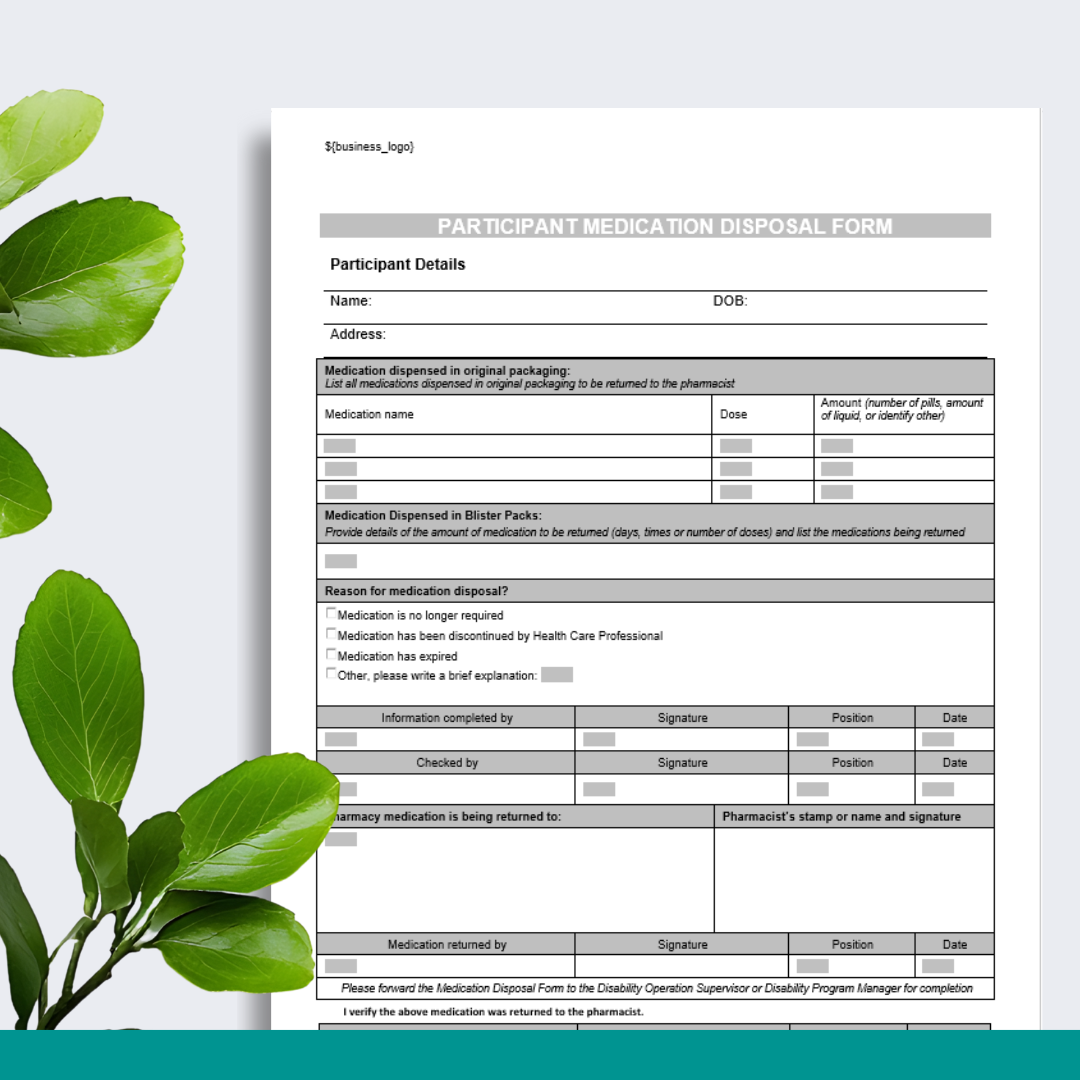
- Disposal of Medication Form
- Out-of-Home Form
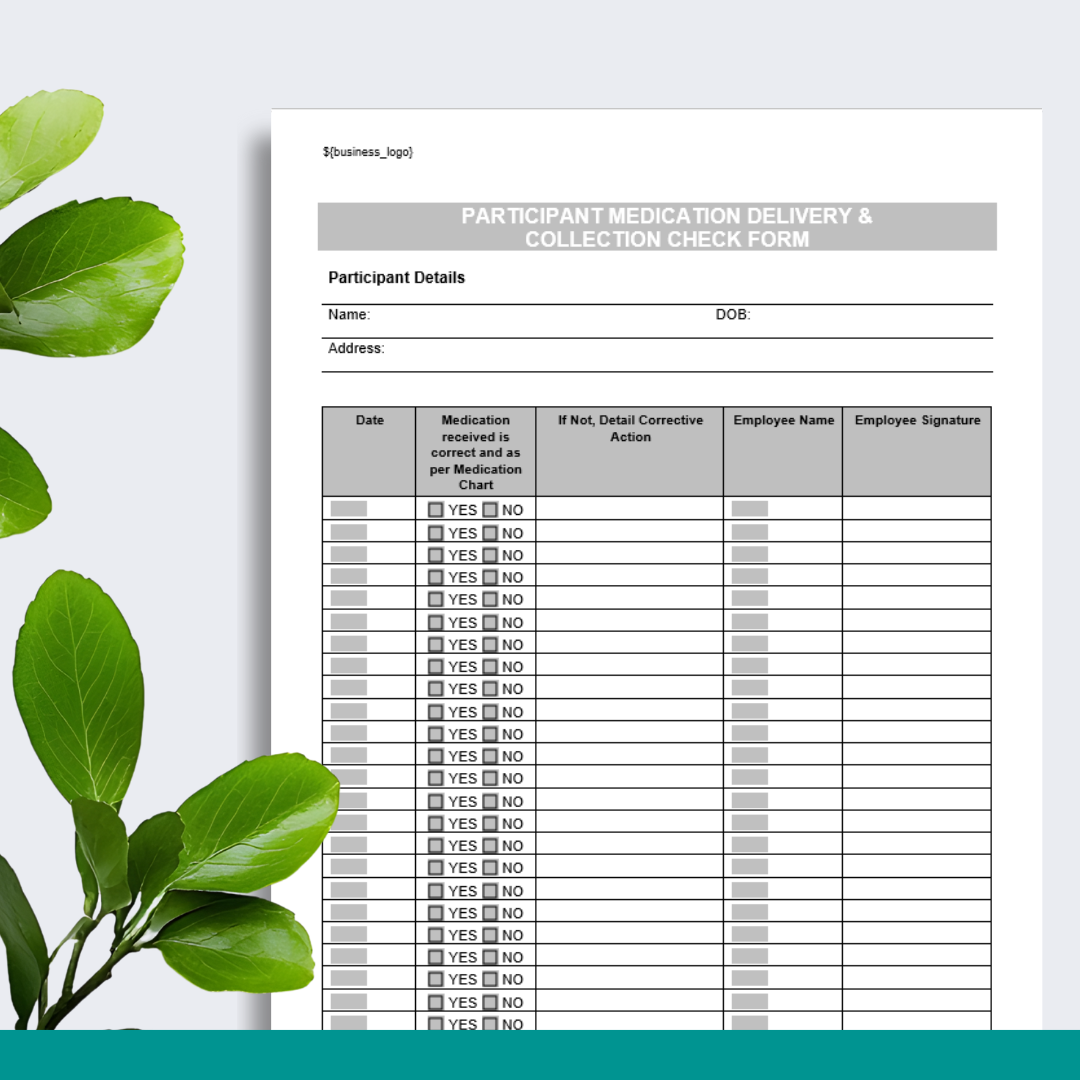
- Medication Collection or Delivery Form
Management of Medication Incident Management
Any missed dose, wrong medication, dosage, time, person, route, refusal, or adverse reaction must immediately activate your incident management system, disaster and emergency system and escalation of urgent or non-urgent events system. Remember a system is a:
- Policies
- Procedures
- Form/s
- Plan/s
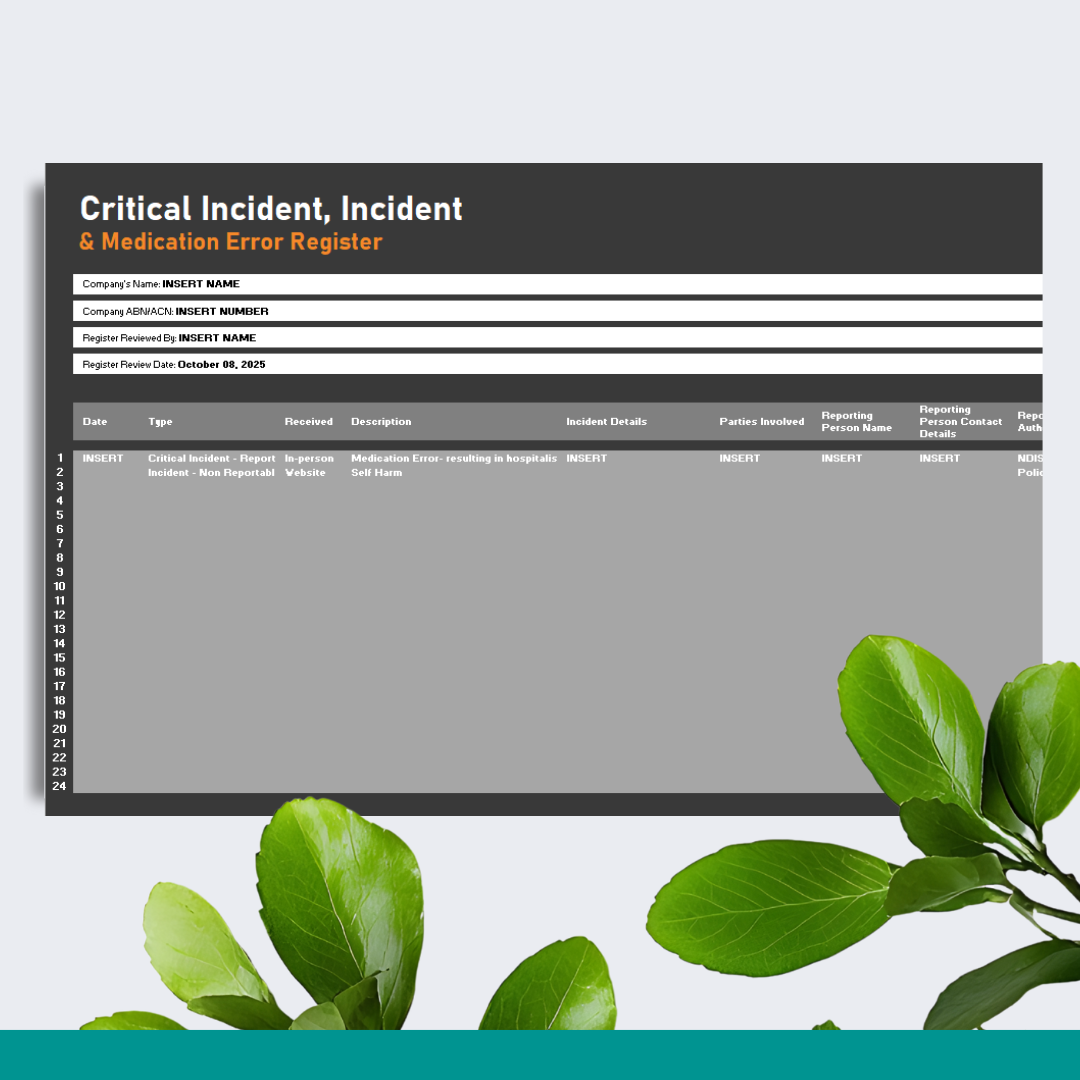
- Register/s
Management of Medication Polypharmacy & Reviews
For participants taking 5 or more medications (or more than 2 antipsychotics), this is called polypharmacy. Refer to Practice Alert - Polypharmacy. You should help coordinate and assist a person to attend medication reviews with a GP every 3 to 6 or as required depending on:
- diagnosis or disability
- participant health & medical needs
- behaviours
- changes or concerns
- medication stock level
- recommendations from medical, specialist or allied health professional.
Medicines Associated with Swallowing Problems
Choking is a major cause of preventable deaths for people with disability. These deaths can be prevented by reducing a person’s exposure to factors that may increase their risk of choking. Certain medicines administered to people with disability can increase the risk of choking in two ways:
- by causing swallowing problems (dysphagia)
- by causing drowsiness (sedation).
- Practice Alert - Medicines Associated with Swallowing Problems
How Medication Chart Use
- Have the gp/prescriber’s current orders recorded on the chart and check that the participant’s details and allergy information are accurate.
- Check the chart against the medication label before supporting a dose. Follow your organisation’s medication policy and the participant’s support plan.
- Record each dose at the time it is given, using the chart’s designated signing area. Record refusals, missed doses or other issues according to your procedures.
- For PRN medication, follow the prescriber’s instructions—including the reason for use, dose and minimum interval—and document why it was given and the outcome as required by your procedures and the participant support plan.
- Keep the chart current, available to authorised workers and protected from unauthorised access. When an order changes, obtain an updated gp/prescriber instruction and follow your organisation’s process for replacing or updating the chart.
- Workers should not use a chart to decide to start, stop or change a medicine or dose. If an order is unclear, inconsistent with the medicine label, or appears outdated, pause and contact the line manager asap.
Medication charts support safe communication and records, but they don’t replace professional judgement or provider training.

Your NDIS Provider Journey, Made Clear
Navigate registration, implement compliance and build the knowledge and systems to operate with confidence as a unregistered or registered NDIS provider.
- Learn Online — Self-paced eLearning
- Book a Mentor — Ad-hoc support
- Join for $80 — Sign up today
- Check Your Compliance — Complete an internal audit
- Get Registration-Ready — Prepare for your NDIS registration
- Stay on Track — Compliance reminders and prompts
- Not Sure Where to Start? — Chat with us here!
Products