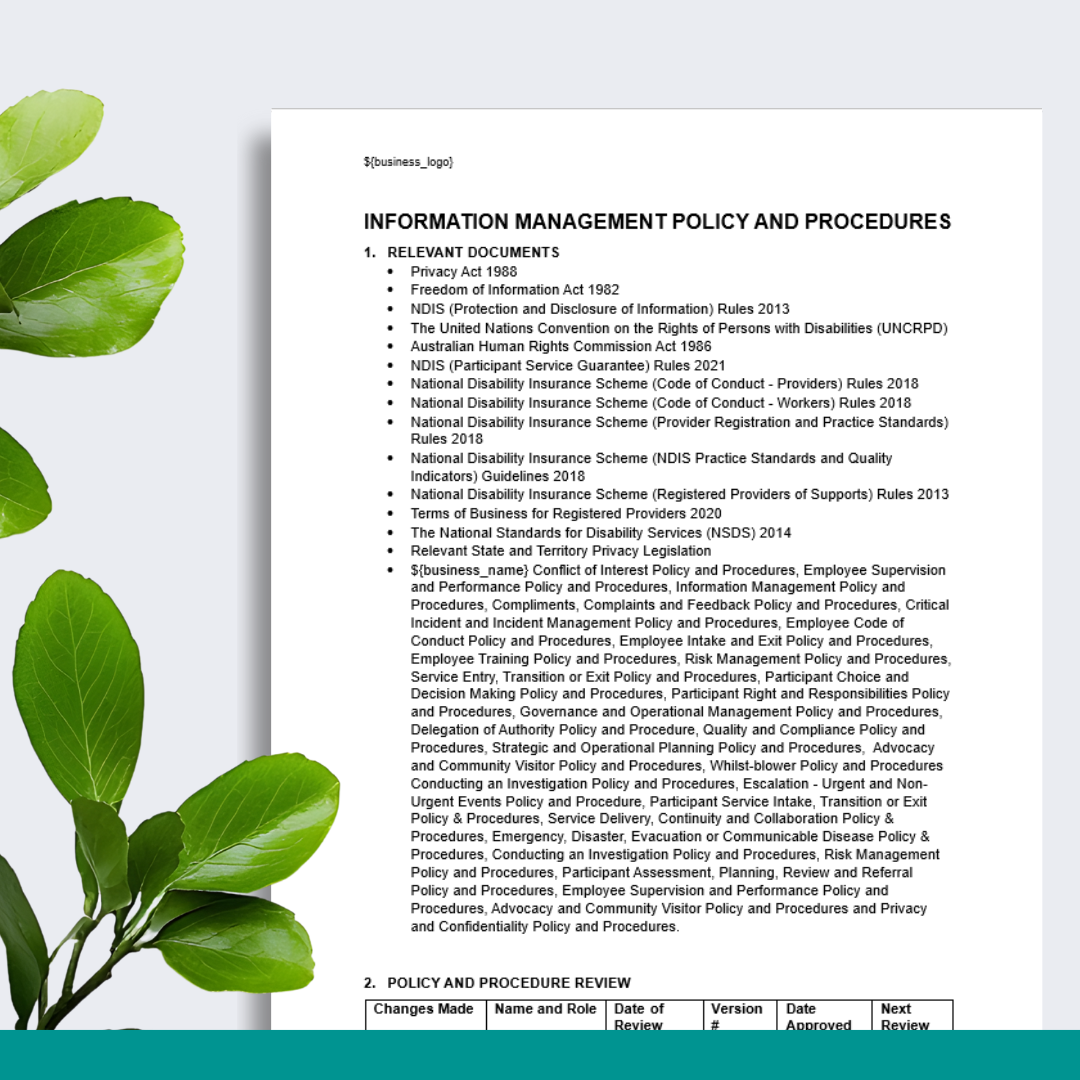
NEW - Record Keeping Rules
NDIS Record-Keeping: What Providers Need to Know
Recent changes to the National Disability Insurance Scheme Act 2013 have strengthened record-keeping and information requirements across the NDIS. The changes were introduced through the National Disability Insurance Scheme Amendment (Integrity and Safeguarding) Act 2026 and the National Disability Insurance Scheme Amendment (Securing the NDIS for Future Generations) Act 2026.
For providers, the changes mean it is increasingly important to keep clear, accurate and accessible records that support claims for payment. They also introduce record-retention duties and penalties for failing to meet applicable requirements. Here’s what the changes mean in practice.
The NDIA can request supporting information!
The amendments allow the NDIA to request further information or documents it reasonably requires to assess a claim. If the requested material is not provided, payment may be withheld. The legislation does not list every document the NDIA might request. The specific records providers must retain are to be set out in the NDIS Rules, so providers should monitor future rule changes. The NDIA’s current guidance describes records that can help demonstrate what support was delivered and how a claim was calculated. These may include:
- Invoices
- Support logs and case notes
- Rosters identifying who delivered the support
- Service agreements, where relevant
- The date and duration of the support
- The type of support delivered, including whether it involved non-face-to-face work or provider travel
Records should clearly identify the participant they relate to—for example, by name or NDIS number. Other records, such as timesheets, pay slips, mileage logs and attendance records, may also help substantiate claims during an audit or payment review. The NDIA’s guidance notes that complete and accurate records are important when verifying claims. (ndis.gov.au)
New Record-Retention Periods
The Securing the NDIS for Future Generations Act 2026 introduces minimum retention periods for certain records relating to NDIS claims and supports:
- Providers: generally, 7 years from the date the claim is made
- Participants who make claims: 3 years
- Nominees: 5 years
The requirements apply to records of kinds prescribed by the NDIS Rules. Providers should factor the applicable retention periods into their record-management policies and systems. (legislation.gov.au)
Penalties and Potential Debts
Failing to retain records when legally required can result in civil penalties. The Act also provides for a debt to be raised in certain circumstances where an NDIS amount has been paid and required records have not been kept. The legislation includes a process for a person to provide alternative evidence of services in some circumstances. It also creates serious penalties for intentionally destroying records to defraud the Scheme or interfere with compliance activity.
What Providers Can Do Now
These changes are about more than storing records for longer. Providers need systems that capture evidence specific to each participant, support delivered and claim made—and make it straightforward to retrieve that evidence when requested. Providers should:
- Review their record-keeping policies (Information Management), staff procedures, digital systems and retention schedules.
- Keep an eye on the NDIS Rules, which will specify the record types covered by the new requirements.
As a self-managed participant or NDIS provider, you need to keep complete and accurate records of NDIS supports delivered. These records include:
- invoices
- support logs
- rosters
- case notes
- service agreements.
It's your responsibility to make sure your claims for payment are complete, truthful and accurate plus contain the minimum identifying information. All record keeping should include the:
- participant’s name
- participant’s NDIS number
- date(s) the support was delivered
- amount and quantity or hours of the support delivered
- support type.
Invoices
Minimum identifying information, invoices need to include your:
- business name
- ABN
- participant’s address (including postcode if it's for specialist disability accommodation)
- support item number listed in the NDIS support catalogue
- claim type
- total invoice amount
- GST component if applicable (most services are GST free )
- ABN of the third-party provider (for plan managers only).
- Each invoice can only be for one participant. Invoices can include multiple NDIS supports.
- Learn more from the ATO about creating invoices .
Support Logs
Support logs keep track of individual NDIS supports delivered to a participant. Support logs need to be signed by either:
- the participant
- a child representative
- a nominee
- legal guardian.
- group rosters show the group activities a participant has engaged in.
Rosters
In addition to the minimum identifying information, rosters need to include:
- details of the activity
- the names of participants and staff (the participant to staff ratio)
- a record that shows that a participant attended the activity as scheduled.
Case Notes
Case notes outline the activities a participant has engaged in and how they relate to the:
- specific support item
- participant’s goals.
- case notes may also include a participant’s progress and plans for future sessions.
Service Agreements
We recommend you make service agreements with participants. A service agreement is a signed agreement between you and a participant. It outlines what NDIS supports and services you’ll deliver and how you’ll deliver them.

- ACCESS ONLINE TRAINING HERE
- BOOK 1:1 WITH A MENTOR NOW
- $80 SIGN UP - OVER 450 TEMPLATES + MORE
- INTERNAL AUDITING TOOL
- REGISTRATION PREP TOOL
- LET US REMIND YOU SERVICE
- NOT SURE - CHAT TO US HERE!
Products